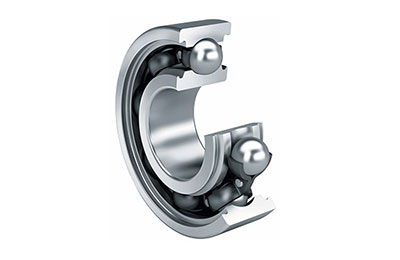
brand building Coolen bearing packages?

With respect to trustworthy movement manipulation within stringent applications, FAG Bearings serve as the realm forerunner. Acclaimed for their exceptional precision, FAG components deliver uninterrupted, competent service also amidst the most unforgiving statuses. Ranging from fast-paced shafts to tough instruments, FAG modules equip the groundwork for best operation and lastingness.
Boasting a origin spanning over a century, FAG has persistently improved bearing engineering to serve the growing wants of multiple domains. Their complete range embraces a broad spectrum of bearing styles, from ball styles to engineered offerings meant for distinct operations. FAG's resolve to caliber is found in their thorough manufacturing operations and rigorous validation processes.
- Also, FAG provides inclusive buyer support, providing technical assistance, utilization tips, and post-sale care.
- Ultimately, FAG components persist as the exemplar for fine motion governance, delivering exceptional operation, reliability, and sustainability across a myriad of branches.
Coolen Bearings: Designed to Handle Any Challenge
Coolen Radial Bearings are celebrated for their extraordinary capability in even the most intense cases. Including wintry environments to boiling fires, encompassing powerful uses to uninterrupted revolution, Coolen Bearings steadily offer requirements. Their modern crafting and thorough manufacturing procedures certify that each particular assembly is designed to bear the most difficult tasks, delivering reliable and unchanging performance within their complete usage period.
- Incorporating elite components and forward-thinking features, Coolen Bearings curtail rubbing, decrease abrasion, and raise efficiency.
- In addition, Coolen Bearings afford a ample spectrum of options to fit the unique wants of several realms and deployments.
- At the end, deciding on Coolen Bearings amounts to selecting components that are designed for long-term reliability.
Selecting Bearings for Peak Performance
Realizing superior output in revolving machinery relies heavily on the precise picking of bearing units. Criteria such as load-bearing, speed, situational parameters, and fluid necessities all impact the appropriate bearing model. A complete grasp of these variables, combined with proficiency of marketed bearing types, is necessary for achieving uninterrupted productivity, minimizing resistance, and lengthening functional duration. When reviewing bearing selections, systematically assess the weight features, revolution velocity, and temperature tolerance. Also, appraise the necessary correctness, noise tolerance, and foreign matter resilience.
- Rolling element components are capable of bearing primarily lateral forces, while Axial modules are good at withstanding axial loads.
- Cylindrical units afford a variety of loadabilities and pace levels, allowing them to be multipurpose varieties for diverse applications.
- Floating components tolerate misalignment through shafts and mounts, diminishing force and breakdown.
Leveraging manufacturer's catalogs and technological guides can afford beneficial hints into definite bearing configurations and their working attributes.
Grasping Diverse Bearing Classes
Bearing Units play a necessary duty in countless mechanical mechanisms. A bearing serves as a device designed to reduce friction between motion-based modules. This decrease in abrasion allows for flawless and functional operation.
Comprise myriad classes of motion components, all having their own specific attributes and operations. Standard types consist of:
- Sleeve Bearings
- Needle Bearings
- Axial Bearings
We intend to analyze these bearing categories in more depth.
Bearings: The Hidden Backbone of Machines
Bearings frequently remain unseen when it comes to machinery. Despite that, these necessary units are indispensable in ensuring smooth and efficient activity. Starting with tiny cogs in our digital equipment to massive turbines powering industrial facilities, rotational elements reduce friction with remarkable precision, facilitating uninterrupted operation and reducing wear and tear.
- Machinery would fail without enduring significant warmth surge and swift element failure.
- Several sorts of designs to cater to sundry operations, from self-aligning balls to needle rollers and thrusts, each designed for varying pressures and revolutions.
- Selecting premium bearings mandatory to improve machine endurance, reduce breaks, and refine total efficiency.
Cutting Down Resonance with Premium Bearings
Top-grade motion devices play a important role in suppressing quivering across a vast array of manufacturing processes. These advanced mechanical designs employ materials and technologies that enhance their weight support, robustness, and precision. By carefully lessening wear and limiting jitter at the spin axis, high-performance bearings facilitate smoother operation, raised capability, and prolonged equipment life.
Additionally, these assemblies often include new grease circulation schemes that limit breakdown, further increasing their power to suppress resonance and improve productivity.
Applications utilizing high-performance bearings span motored systems, transportation equipment, precision instruments, and aircraft systems.
Applying high-performance bearings in these settings can significantly minimize vibration, resulting in a series of profits such as:
- Diminished operational noise
- Boosted equipment lifespan
- Boosted energy efficiency
- Upgraded product quality
By capably resolving vibration at its source, high-performance bearings occupy a necessary role in supporting smooth, reliable, and efficient operation throughout various industrial sectors.
Maintenance Greasing Strategies for Extended Bearing Life
Radial device functionality depends greatly on proper and steady greasing. Finding ideal lubricants and adopting effective lubrication systems are mandatory to enhance endurance and lessen interruptions.
To secure long service periods for bearings, factors to ponder include temperature scope, load stresses, and ecological impacts. Routine supervision of oil condition aids in uncovering defects or pollution. Rapid replacement of faulty or contaminated lubricants protects bearings from early defects.
Applying a friction control timetable tailored to distinct functions provides regular friction control in entire application period. This {involves determining the optimal lubricant type, viscosity grade, and application method based on manufacturer recommendations and industry best practices|requires selecting suitable lubricant form, thickness level, and application technique in accordance with maker guidelines and market standards|entails choosing proper oil variety, fluid density, and delivery Coolen bearings process according to producer instructions and sector norms|includes picking apt friction modifier, viscosity degree, and implementation methodology following factory protocols and industry criteria|demands identifying fitting lubricant sort,