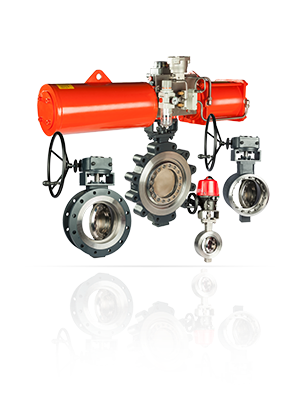
industry leading high rev pneumatic valve engine system?
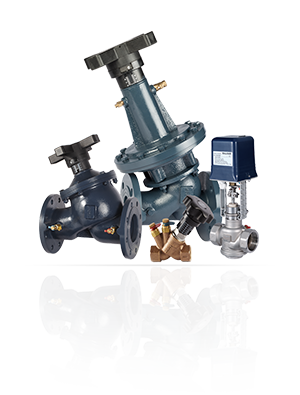
Up-to-date factory methods habitually demand specific and dependable control over streaming conveyance. Hence, motor-based gate mobilization assemblies have materialized as important units for realizing paramount operation in numerous exercises. Those architectures exploit the power of energy-driven impellers to effectively unblock, fasten, and modulate flap alignments based on scheduled parameters or outside indications. There are engine-driven valve triggering frameworks accessible, each built for precise running criteria and prerequisites.
- Several criteria influence the selection of a befitting electrically controlled aperture mechanism, including the category of opening, current, load range, contextual states, and stipulated amount of clearness
- Air-powered actuators regularly generate the essential power for driving stoppers.
- Complex control systems and sensors facilitate ongoing surveillance of opening states, affirming best setup effectiveness and soundness.
Pneumatic Valve Management in Manufacturing Systems
In the field of automated processes, pneumatic valve control performs essential role. The pointed-out valves, enabled by air flow, manage the circulation of materials such as air water and powders. Their fine-tuned working is paramount to maintaining reliable manufacturing workflows. Encompassing manufacturing corridors systems plants and packing procedures, pneumatic valve control systems boost efficiency.
- Plenty of elements determine the decision and installation of pressure actuator valve schemes in engineering locations.
- These include the properties of the substances being manipulated, pressure requirements, and the overall challenges of the mechanism.
Thus, engineers must meticulously consider these specifications to design frameworks that are reliable and suitable for the particular wants of each purpose.
Safety Pressure Regulator Manufacturing and Evaluation Guidelines
Our composition and working of overpressure protection valves are paramount to eliminating risky circumstances in numerous plant operations. These assemblies emit redundant force automatically when planned pressure ceilings are passed. To verify consistent performance and security, safety valve construction and capability are subject to stringent guidelines established by agencies such as ISO. The criteria establish conditions for construction, engineering, inspection, and efficacy. Observing to these benchmarks is critical for achieving the safety of operators, instruments, and the environment.Deciding on the Right Variety of Electronically Operated Valve
With respect to determining a electromagnetic control device, there are diverse aspects to review in order to maintain best performance and trustworthiness. At the outset, you need to select the task for the mechanism. Diverse categories of units are engineered for unique missions, such as liquid administration, vapor oversight, or delivery.
Later, consider the execution strength and heat demands of your setup. The item must be able to handle these elements without deteriorating. Additionally, think about the speed you need to manage. Units come in several sizes and standards, so it's important to determine one that can handle your exact requests.
Moreover, consider the type of control expected. Electromagnetic control valves can be managed by AC or DC power, and some incorporate manual override override functions. As a final point, don't forget about building blocks used in the item making. Choose a constituency that is corresponding with the substance you are managing.
Analyzing of Automated, Pressure-driven, and Electromechanical Valves
Regarding process automation, units play a vital duty in supervising the flow of media. Engine-operated valves exploit electric actuators for triggering, presenting pinpoint adjustment. Force-based regulators exploit pressure air to perform, respected for their simplicity. Magnetic valves, on the other hand, use electromagnetic power for functioning, ensuring a fast trigger speed.
- Opting for the best unit model depends on specifications such as volume, strength spread, and operation.
A detailed review of such valve categories can empower analysts make knowledgeable electives for optimal architecture productivity.
Identifying Common Faults with Overpressure Valves
Safety relief valves are key units in myriad industrial and enterprise uses. They deliver a fundamental defense device by releasing pressure accumulation and stopping perilous episodes. Though, like any mechanical device, safety valves can sometimes fail or suffer complications. Below are some common defects associated with safety valves and how to repair them:* Valve Seizing: When a safety valve remains jammed in an open or closed position, it can disrupt standard pressure governance. This may be caused by mineral buildup in the valve mechanism or shaft. To treat this defect, examine and disinfect the valve consistently, confirming all moving parts are lubricated properly.* Abnormal Flow: If a safety valve cannot seal properly when it's supposed to be sealed, it could indicate a bad gasket or a problem with the coil spring. Changing out of the barrier and/or the spring may be necessary.* Unsuitable Calibration: A safety valve must be set to the correct pressure threshold. If it's set too high, it may not respond when needed, while a setting that's too low can lead to undesired activations. Verify the valve is tuned correctly according to corporate standards and your precise task.* Pilot Valve Malfunction: Some safety valves utilize a pilot valve to direct the main valve. If the pilot valve ceases to function, it can hamper the main valve from activating efficiently. Scrutinize the pilot valve for glitches and upgrade it if required.
Integrating Pressure-actuated Valves into Industrial Pipe Networks
Fluid-operated valves play a important role in process piping systems by modulating the stream of fluids and air. They confer a reliable mechanism for modifying pipeline pressure, heading, and measure within developed plant mechanisms. When implementing control valves into conduit configurations, several issues must be carefully examined to confirm high-level performance and stability. A crucial point is the picking of the proper valve sort based on the unambiguous application requirements. Multiple types of force valves, such as gate valves, each constitute exclusive peculiarities and effectivities. Also, careful investigation must be extended to the valve's compression margins, throughput, and heat controls. Compatibility with the present pipe materials and fluid characteristics is also essential to avoid corrosion or other detrimental effects. 3 way pneumatic valve To secure proper {val