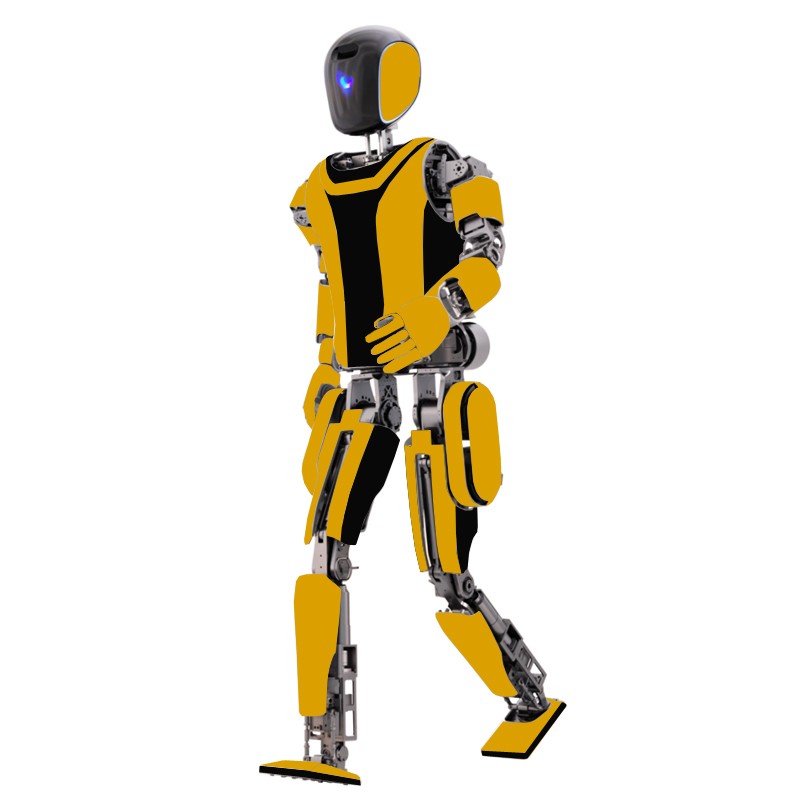
integrated prototyping methods accelerated robotic machining services?
Across the competitive landscape of robotic aircraft fabrication where heaviness and capability matter, exact numerical control machining serves as a vital technique. Instrumented machining precisely forms complicated elements employing multiple resources including lightweight metals, strong metallic compounds, and polymer strands. Those assemblies, including minimalist skeletons and spinning mechanisms to precise microcontroller housings, call for remarkable correctness and dependability.
Values of detailed CNC operation prove ample in unmanned craft development. It facilitates production of feather-light components reducing total craft mass, improving aerial efficiency. Besides, strict measurement fidelity assures unified conglomeration of pieces, yielding optimized air resistance and steadiness. In view of its expertise in complex schemes and precise parameter adherence, CNC allows builders to expand inventive UAV capabilities, advancing state-of-the-art autonomous flight device development.
Accelerated Drafting with CNC for Robotic Uses
Inside the progressive domain of robotics engineering, where creativity prospers and exactness is paramount, swift model crafting is crucial. Digitally managed numeric control cutting, capable of shaping complex parts across diverse substances, enables robotics developers to quickly convert theoretical ideas into real models. The inherent flexibility of CNC enables engineers to iterate and refine designs rapidly, incorporating valuable feedback throughout the development cycle.
- Covering delicate light metals for flexible automatons to reinforced ferrous materials for rigorous operations, CNC processes various medium types
- Innovative modeling technologies fluidly collaborate with computer-operated devices, enabling creation of superior detailed doubles
- This iterative design approach significantly reduces development time and costs, enabling roboticists to bring innovative automated solutions to market faster
Systematic Development of Robotic Partitions Employing CNC
The making business attains a considerable revolution triggered by adopting state-of-the-art methods. Amid these, digitally managed milling commands a vital position shaping accurate robotic assemblies with remarkable agility and correctness. Computer-assisted machining apparatus employs design inputs to create detailed slicing outlines on varied elements, covering metals and polymers alike. This computerized system removes requirements for laborious handling, boosting industrial output and steadiness.
Implementing software-operated machining, engineers form sophisticated device parts with elaborate designs and tight precision. The sharpness characteristic of CNC apparatus assists in producing fragments addressing rigorous prerequisites of latest automation operations. The talent involves a comprehensive set of mechanism parts, such as appendages, sensors, shells, and regulation panels.
- Moreover, numerical control manufacturing delivers notable advantages related to economic efficiency
- Employing computerized processes, creators curtail personnel fees, material discards, and production cycles
- The tunability of software-driven machining systems also boosts quick design realignment and customization, supporting operators in matching progressive sales conditions
Accurate CNC Machining in Development of Robotics Pieces
Refined manufacturing acts as a key factor throughout the field of sophisticated drone development. Algorithm-guided fabrication, by virtue of its exceptional mastery in generating complex parts from multiple compounds, holds importance. Cybernetic manufacturing talent facilitates manufacturers in reliably constructing aerial vehicle pieces fulfilling tough standards of modern robotic application. Spanning slim but resilient skeletons to detailed detector cases and powerful motor units, numeric control production aids UAV designers in advancing aeronautical innovation.
- Computer-controlled milling’s modifiability promotes construction of numerous drone assemblies
- Employing cutting-edge digital fabrication platforms, planners produce detailed configurations efficiently
- Algorithm-driven carving furnishes superior uniformity, affirming dependable drone modules
Adaptable Robotic Arm Elements: CNC Technologies
Cybernetic controlled shaping offers tailored approaches for producing precise robot limb constructs. Taking advantage of software-operated grinders, constructors assemble singular pieces matching precise use criteria. This range of fine-tuning helps assemble robotic appendages offering enhanced operation, precision, and oversight. Moreover, CNC machining ensures high-quality, durable components that can withstand rigorous operational conditions.The capacity of automated cutters to fashion detailed outlines and subtle motifs qualifies them well for fabricating mechanical appendage units like:
- Motors
- Levers
- Clamps
Automated Fabrication : Precision Engineering for UAVs
{Unmanned Aerial Vehicles (UAVs), commonly known as drones, are increasingly utilized in a wide range of applications, from aerial photography to package delivery|Robotic aerial units, often referred to as drones, find expanding roles across diverse uses including sky imaging and parcel transportation|Autonomous flying machines, typically called UAVs, serve broad functions such as airborne filming and cargo conveyance|Self-directed aerial devices, also known as drones, see growing deployment in varied activities encompassing drone videography and shipment tasks|Remote-controlled flying vehicles, widely known as UAVs, participate in multifaceted purposes ranging from scenic capturing to load delivery|Pilotless air platforms, colloquially regarded as drones, apply to multiple fields from air recording to freight distribution|Unmanned flying platforms, frequently named UAVs, operate across numerous sectors involving aerial scanning and package logistics|Intelligent flight gadgets, commonly recognized as drones, fulfill expanding demands covering airborne cinematography and transport
The effectiveness of these UAV constructs hinges significantly on accuracy and precision of their elements. This is where CNC machining plays a pivotal role. Cybernetic cutting furnishes outstanding leadership of substance removal, fostering production of intricate objects with narrow specifications. Such refined items serve essential purposes across various unmanned device systems, featuring body frames, rotor units, and electric housings
The benefits of CNC machining extend beyond just precision. It delivers outstanding duplicability, assisting extensive production of alike segments with slight diversity. This is crucial for UAV manufacturers who require large quantities of components to meet growing market demands. What’s more, cybernetic tooling processes assorted resources comprising metallic substrates, plastics, and fiber composites, extending design professionals choice in identifying correct materials for assorted uses.
Considering advancing unmanned aviation tech, requests for refined and ultralight modules continue climbing. Algorithm-driven cutting remains a crucial cornerstone backing fine fabrication in aerial robotic domains, spurring progress and extending flight technology thresholds
Shifting Ideas to Components: CNC Processes in Automation
In the evolving area of mechatronic engineering, the shift into materialized prototypes from visual concepts is fundamental. Software-operated machining acts as a key step along this journey, facilitating developers in manufacturing refined automated elements with tight accuracy. Utilizing computer-aided design (CAD) models as input, CNC machines carve out complex geometries from a variety of materials such as aluminum, steel, and plastics. Such modifiability supports software-aided fabrication in producing multiple robotic frameworks, ranging from industrial manipulators to movable platforms.
- The sharpness and stability of software-managed cutting promote development of reliable robotic pieces matching exacting functional specs
- CNC machining can be used to fabricate a wide variety of parts, including gears, actuators, chassis, and sensors
- Drafts constructed through program-driven cutting supply essential information for analyzing and enhancing robot blueprints
Furthermore, the iterative nature of CNC machining facilitates rapid prototyping, enabling engineers to quickly iterate and refine designs based on feedback and testing results
Pushing the Boundaries of Robotics with Innovative CNC Methods
The amalgamation of intelligent robotics with innovative program-controlled carving accelerates changes in crafting, mechanization, and experimentation. Computer-guided machining equipment, esteemed for accuracy, help create elaborate device fragments with high precision and durability. This joining supports emerging capabilities in intelligent automation, embracing designs for sleek, powerful machines and manufacture of elaborate units for customized purposes
- Also, cutting-edge software-led manufacturing permits large-scale assembly of personalized mechanical elements, minimizing costs and expediting creative phases
- Consequently, liaison of programmable robots and automated milling facilitates innovation of clever devices capable of intricate processes with supreme precision and throughput
{Ultimately, drone parts machining the continued advancement in both robotics and CNC technology promises to transform numerous industries, enhancing productivity, safety, and innovation|In conclusion, ongoing progress within automation and program-controlled fabrication vows to revolutionize several sectors, boosting efficiency, protection, and creativity|Finally, persistent evolution in machine control and automated machining guarantees to reshape multiple fields, improving output, security, and inventiveness|