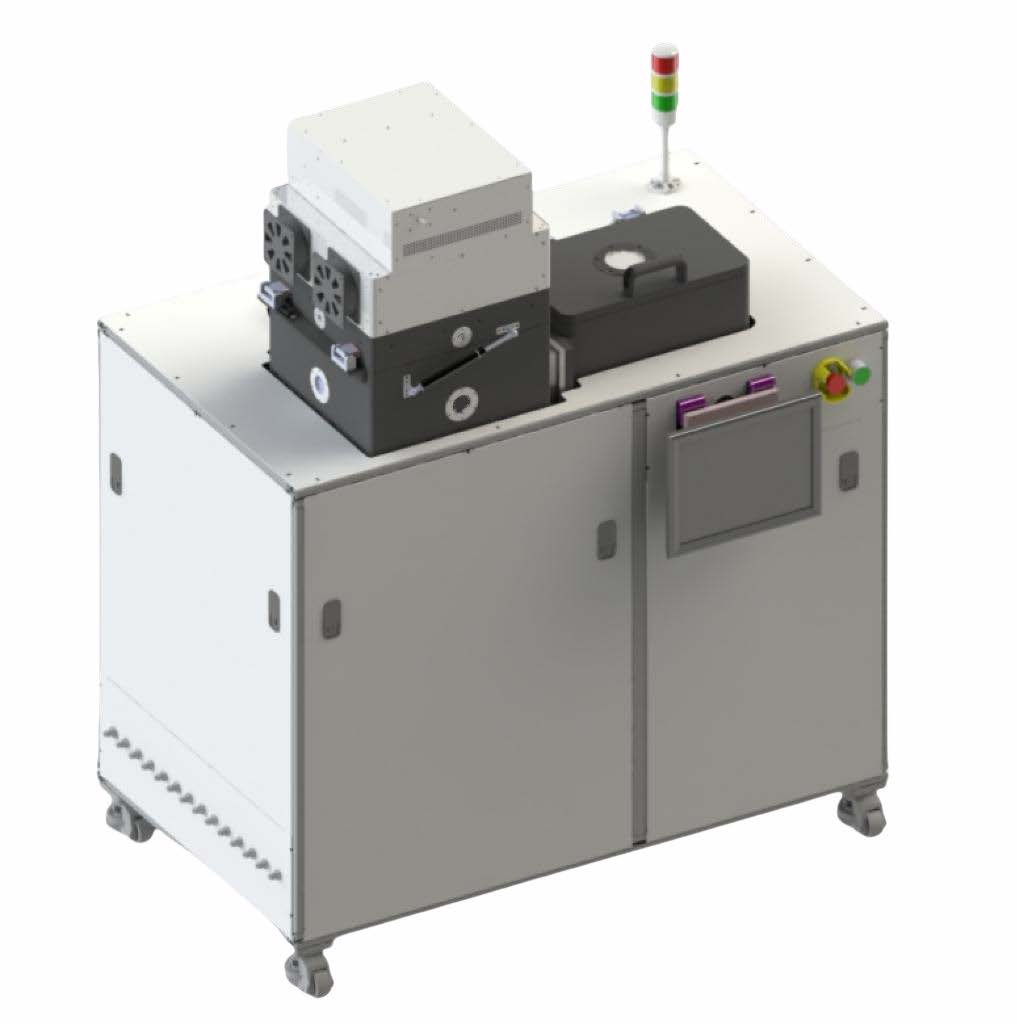
performance enhanced next gen icp etcher roadmaps?

Basic Principles for charged particle etching throughout microchip processing. This method exploits ionized gas to selectively eliminate material substances for exact layout creation during microscale production. By adjusting principal elements like compound mixtures, power magnitude, and gas pressure, the process velocity, material differentiation, and directionality can be explicitly controlled. Ion-assisted etching has significantly impacted electronic patterning, measuring instruments, and modern digital devices.
- Moreover, plasma etching is frequently applied for specialties in image processing, bioengineering, and composite materials study.
- Countless styles of plasma etching are applied, including charged ion etching and inductive plasma removal, each with characteristic positive aspects and weaknesses.
The detailed characteristics of plasma etching involve a detailed grasp of the fundamental mechanical laws and chemical mechanisms. This paper seeks to offer a detailed explanation of plasma etching, incorporating its key points, different categories, applications, advantages, complications, and anticipated innovations.
Riechert Microfabrication Precision Devices
Concerning small-scale production, Riechert etchers excel as a key player. These sophisticated devices are esteemed for their unmatched fineness, enabling the manufacturing of delicate works at the invisible magnitude. By employing modern etching methods, Riechert etchers achieve accurate directing of the manufacturing sequence, giving top-grade outcomes.
Riechert etchers find application in a comprehensive selection of industries, such as circuitry. From generating microchips to designing advanced medical gadgets, these etchers play a vital role in influencing the progress of technical advances . With resolve to advancement, Riechert pioneers norms for exact microfabrication.
Reactive Ion Etching: Essentials and Usage
Ion-assisted reactive etching constitutes a crucial means in chip manufacturing. RIE engages a fusion of plasma ions and reactive gases to etch materials with specificity. This technique includes bombarding the coating base with energetic ions, which engage with the material to manufacture volatile chemical products that are then taken away via a pressure device.
RIE’s competence in anisotropic profiles makes it uniquely advantageous for producing elaborate formations in electronic circuits. Applications in device fabrication involve the creation of semiconductor switches, silicon dies, and lightwave devices. The technique can also construct vertical channels and vertical passages for memory arrays.
- Processes using RIE offer exact regulation over material ablation and component selectivity, enabling the production of precise geometries at narrow tolerances.
- Many active gases can be applied in RIE depending on the base material and required pattern features.
- The profile-controlled quality of RIE etching facilitates the creation of sharp contours, which is vital for certain device architectures.
Controlling Etch Profiles in ICP Processes
ICP-driven etching has come forward as a noteworthy technique for assembling microelectronic devices, due to its notable capacity to achieve solid directional accuracy and compound differentiation. The fine regulation of process inputs, including electrical power, component balances, and system pressure, ensures the exact tuning of chemical reaction rates and pattern geometries. This flexibility enables the creation of sophisticated patterns with limited harm to nearby substances. By optimizing these factors, ICP etching can reliably suppress undercutting, a usual complication in anisotropic etching methods.
Study of Plasma Etching Procedures
Reactive plasma etching techniques are globally recognized in the semiconductor realm for formulating sophisticated patterns on material bases. This survey evaluates different plasma etching styles, including chemical vapor deposition (CVD), to assess their effectiveness for diverse materials and requirements. The review underscores critical parameters like etch rate, selectivity, and surface detail to provide a in-depth understanding of the merits and drawbacks of each method.
Fine-Tuning Process Settings to Boost Etching Speed
Gaining optimal etching rates in plasma operations requires careful factor refining. Elements such as energy input, reactant proportioning, and pressure condition materially govern the surface modification rate. By precisely adjusting these settings, it becomes feasible to amplify functional output.
Insight into RIE Chemistry
Ion-enhanced plasma etching is a fundamental process in microscale engineering, which covers the use of charged ions to specially sculpt materials. The essential principle behind RIE is the reaction between these energized particles and the target material top. This interplay triggers molecular processes that destroy and carry away constituents from the material, giving a desired design. Typically, the process utilizes a composition of charged molecules, such as chlorine or fluorine, which get activated within the plasma environment. These charged species bombard the material surface, triggering the ablation reactions.Impact of RIE is determined by various variables, including the category of material being etched, the utilization of gas chemistries, and the performance variables of the etching apparatus. Targeted control over these elements is fundamental for maintaining first-class etch designs and lowering damage to close-by structures.
ICP-Driven Etch Profile Control
Gaining true and reliable constructs is important for the achievement of various microfabrication processes. In inductively coupled plasma (ICP) etching systems, command of the etch geometry is essential in specifying scales and forms of features being engineered. Notable parameters that can be tuned to impact the etch profile involve process gas composition, plasma power, sample temperature, and the hardware structure. By systematically regulating these, etchers can produce structures that range from evenly directional to profile-controlled, dictated by specific application specifications.
For instance, mainly vertical etching is frequently requested to create narrow pits or conductive holes with sharply defined sidewalls. This is effected by utilizing large fluoro gas concentrations within plasma and sustaining controlled substrate temperatures. Conversely, uniform etching makes softly contoured profiles owing to its three-dimensional character. This category can be beneficial for large-area removal or surface defect correction.
Additionally, innovative etch profile techniques such as plasma pulsing enable the construction of finely tuned and high-aspect-ratio features. These processes usually involve alternating between plasma bursts, using a blending of gases and plasma conditions to ensure the targeted profile.
Appreciating key elements that control etch profile management in ICP etchers is vital for refining microfabrication workflows and executing the desired device operation.
Ion Milling Processes for Chip Manufacturing
Plasma-assisted removal is a primary technique executed in semiconductor creation to accurately ablate substances from a wafer layer. This method implements charged plasma, a integration of ionized gas particles, to etch selected patches of the wafer based on their fabrication texture. Plasma etching provides several pros over other etching means, including high dimension control, which allows for creating slender trenches and vias with low sidewall deformation. This accuracy is vital for fabricating detailed semiconductor devices with composite designs.
Uses of plasma etching in semiconductor manufacturing are various. It is deployed to develop transistors, capacitors, resistors, and other key components that construct the foundation of integrated circuits. Moreover, plasma etching plays a key role in lithography techniques, where it makes possible the meticulous organization of semiconductor material to map circuit arrangements. The accurate level of control provided by plasma etching makes it an essential tool for contemporary semiconductor fabrication.
Upcoming Trends in Plasma Processing
Ion-assisted etching technology is in perpetual innovation, driven by the heightened search pecvd system for refined {accuracy|precision|performance